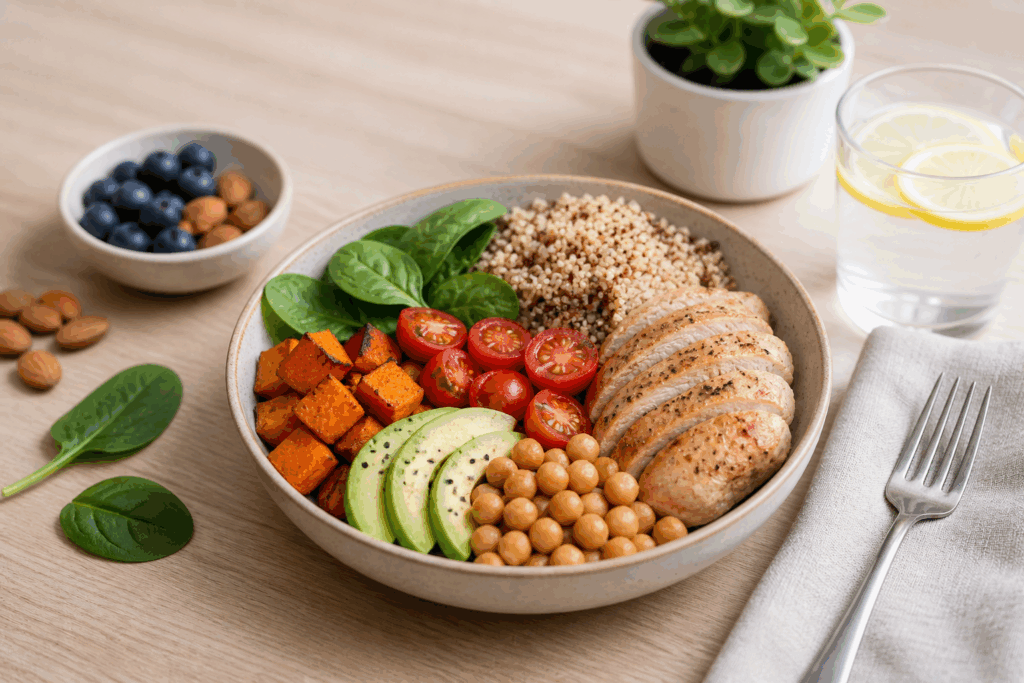
Nutrition is often where people feel pressured to do the most.
Cut something out. Start over. Follow the rules. Be more disciplined.
But what if supporting your health did not begin with restriction?
What if it started with adding support instead of taking things away?
Why Nutrition Feels So Hard During Stress
When stress is high, meals are often the first thing to become inconsistent.
Many people begin skipping meals, grabbing whatever is easiest, or going long periods without enough nourishment. Over time, this can affect:
Energy levels
Recovery
Focus and concentration
Hunger regulation
Emotional steadiness
Overall physical wellbeing
When nutrition becomes inconsistent, the body often feels unstable.
You may notice:
Energy crashes throughout the day
Feeling shaky or drained
Increased irritability
Brain fog
Strong cravings
Constant hunger or urgency around food
On the other hand, when meals become more supportive and consistent, the body often feels more regulated and steady.
Energy tends to stabilize. Hunger cues become less chaotic. It can feel easier to move through the day without constantly feeling depleted.
What the Research Is Actually Saying
Research consistently shows that long-term health is shaped more by sustainable habits than extreme dietary changes.
Studies continue to highlight the importance of:
Protein intake for satiety, muscle maintenance, and recovery
Fiber intake for digestion, blood sugar regulation, and cardiovascular health
Repeatable habits over perfection
According to research published in journals such as Frontiers in Nutrition, Nutrients, and Circulation, small improvements practiced consistently over time can positively influence:
Blood sugar regulation
Cholesterol levels
Cardiovascular health
Metabolic function
Recovery and energy balance
The takeaway is simple:
Your body often benefits more from one supportive habit repeated consistently than from a short-lived attempt to eat perfectly.
This is not about forcing a complete reset.
It is about creating steadiness through one small addition.
One Small Shift
Add One Consistent Source of Protein or Fiber
That’s it.
No elimination. No strict rules. No starting over.
Just one supportive addition to a meal you already eat.
Simple Ways to Try It
Keep this practical and low effort.
You might:
Add eggs or Greek yogurt to breakfast
Add beans to rice, soup, or salads
Add chia seeds, flaxseed, or nuts to oatmeal
Add chicken, tofu, tuna, or lentils to lunch
Add fruit or vegetables to a meal you already eat regularly
The goal is not to create an entirely new routine.
Instead, choose one meal that already exists in your life and make it slightly more supportive.
Why This Works
Meals that are missing protein or fiber can leave energy feeling less stable.
Hunger may return quickly. Cravings may become louder. Recovery can feel slower, especially during stressful seasons.
Adding protein or fiber helps create more steadiness by supporting:
Fullness and satiety
Stable energy levels
Digestive health
Blood sugar balance
Metabolic health
Physical recovery
Small additions can create meaningful change over time.
Sometimes health is not about doing more.
Sometimes it is simply about supporting your body more consistently.
Remember This
Long-term wellness is often shaped by repeatable choices, not extreme ones.
Sometimes the smallest shift is not taking something away.
It is adding one thing that helps your body feel more supported.
Let that be enough.
Key Takeaways
Nutrition support does not have to begin with restriction
Consistency matters more than perfection
Protein and fiber can help stabilize energy and hunger
Small supportive habits often create sustainable change
One simple addition can make meals feel more nourishing over time
Frequently Asked Questions
What is the easiest way to improve nutrition without dieting?
Start by adding one supportive food source, such as protein or fiber, to a meal you already eat consistently.
Why are protein and fiber important?
Protein supports recovery and fullness, while fiber supports digestion, blood sugar regulation, and heart health.
Do I need to completely change my eating habits?
No. Research shows that small, repeatable improvements are often more sustainable and beneficial than extreme dietary changes.
Can stress affect eating habits?
Yes. Stress commonly disrupts meal consistency, hunger cues, energy levels, and recovery.
Works Cited
Fu, Lingmeng, et al. “Associations between Dietary Fiber Intake and Cardiovascular Risk Factors: An Umbrella Review of Meta-Analyses of Randomized Controlled Trials.” Frontiers in Nutrition, 2022.
Halton, Thomas L., and Frank B. Hu. “The Effects of High Protein Diets on Thermogenesis, Satiety and Weight Loss.” Journal of the American College of Nutrition, 2004.
Lattimer, James M., and Mark D. Haub. “Effects of Dietary Fiber and Its Components on Metabolic Health.” Nutrients, 2010.
American Heart Association. “2026 Dietary Guidance to Improve Cardiovascular Health.” Circulation, 2026.
Morton, Robert W., et al. “Protein Supplementation and Resistance Training-Induced Gains in Muscle Mass and Strength.” British Journal of Sports Medicine, 2018.
Brittany Sloan is a health + wellness coach, yoga teacher, and run coach who brings two decades of clinical research experience into every conversation about well-being. Her background spans academic medical centers and sponsor-level roles from clinical assistant and study coordinator to regulatory and compliance work giving her a grounded, evidence-informed perspective on what keeps people well.
She is the founder of ThreeBreaks Wellness, a coaching and consulting practice rooted in restoration, self-trust, and sustainable healing. Her work is deeply shaped by a love for Black people our health, our stories, our survival, and our joy. Brittany supports clients in reconnecting with themselves, realigning their lives, and reclaiming the parts of their wellbeing that systems have historically ignored.
She shows up with warmth, honesty, and a steady, nurturing presence offering guidance that is both compassionate and direct, always grounded in the belief that Black folks deserve care that honors the fullness of who we are.