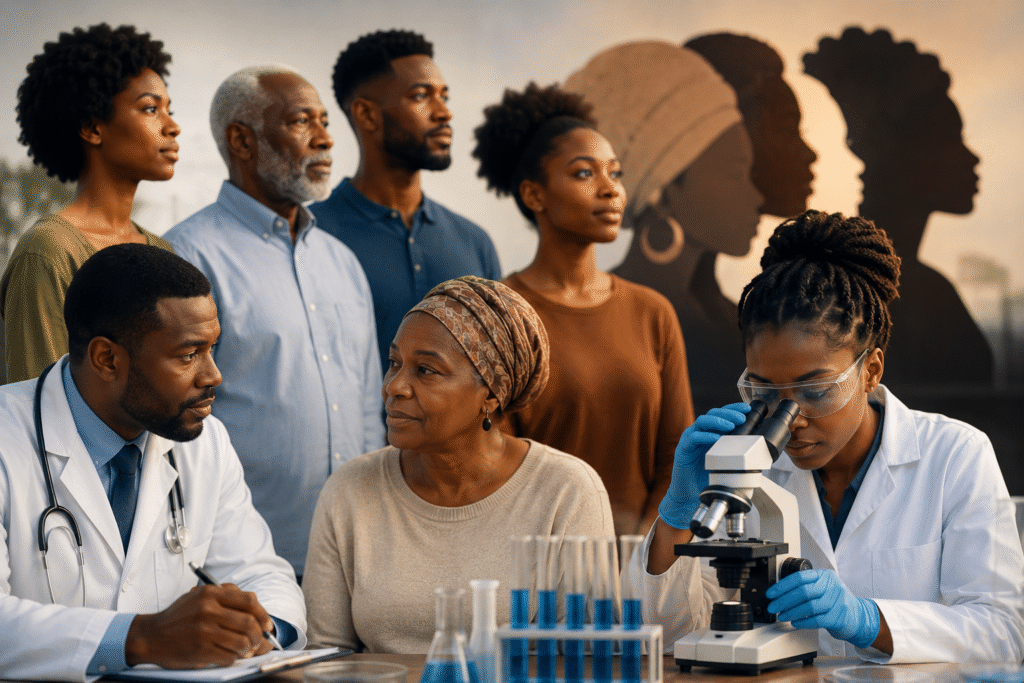



Clinical Research and African American participation remains an important topic in healthcare as researchers work to improve health outcomes through new treatments, therapies, and diagnostic methods.
Clinical research refers to studies that involve people and aim to improve health outcomes by investigating new treatments, therapies, and diagnostic methods.1 This special branch of health science is needed to advance better healthcare for patients. Although clinical research improves the quality of healthcare, there are deep roots of hatred and resentment from the African Americans (AA) community. This resentment planted seeds of scrutiny and distrust towards healthcare and clinical research, resulting in exclusion of the latest trends and innovative research.
According to Hopkins medicine.org, AA are significantly underrepresented in clinical research, making up approximately 13% of the United States, but only 8% of research participants. Other statistics also show AA represents between 5%-7% in clinical trials, despite higher mortality rates from certain cancers.2 The purpose of this article is to inform and address the current issues involving AA and clinical research as well as discuss potential solutions to increase participation.
In the early days of medical research in the United States, AA were often excluded from clinical trials that led to medical advancements. Simultaneously, there were notorious instances where AA’s were subjected to unethical research practices. One of the most infamous examples was the Tuskegee Syphilis Study (1932-1972), in which hundreds of AA men with syphilis were left untreated without their informed consent to study the progression of the disease. 3 AA women were also victims of unethical research studies. For example, J. Marion Sims, who is known as the father of Gynecology, forced enslaved AA women to undergo surgical procedures such as vesicovaginal fistula without anesthesia to study childbirth complications (1845-1848). 3 These incidents deeply eroded trust in the medical system among AA communities.
Several barriers have historically limited AA in clinical research. There are, however, three major barriers that should be mentioned:
Clinical research has come a long way from exploitation and racially charged clinical trials. Today, clinical research is bound by laws and regulations. There are processes each study must go through to prove the safety and effectiveness of the clinical trial.
Prior to conducting clinical research on humans, the Food and Drug Administration (FDA) must approve the study to ensure the safety of the research participants. Unlike The Tuskegee Study, each participant must undergo an informed consent process in which the participants read about the clinical trial, ask questions, and sign the consent. The research participants are aware they can withdraw from the study at any time.

AA’s desperately need the medical advantages and revelations that only ethical, therapeutic research initiatives can give them. The reticence of AA’s is reasonable and understandable due to the result of a horrendous history, but it lags progress. The AA research experience reflects the realities of yesterday, not today. 3 The consequences of intense fear and hatred towards clinical research in the AA community cause them to miss treatments and innovative research.
Clinical research has come an extraordinarily long way from being horrific. As said previously in this article, clinical research is now bound by many laws. These laws are centered around ethical principles and participants protection and their rights.
In reference to ethics, there are four major ethical principles we must abide by: beneficence, nonmaleficence, autonomy, and justice. These principles set the stage for good clinical practice and a smooth, successful clinical trial.
Having previously worked as clinical research coordinator, I experienced firsthand how AA’s shy away from clinical trials. A potential participant spoke negatively about clinical research. The first thing I did was meet them where they were & informed them about the benefits of clinical research: no cost to take part, test medication is free of charge, free medical care, and there is a stipend for taking part.
Clinical research is the reason there are so many new mediations for various medical conditions. Clinical trials create a new pathway for being healthy and improved quality of life.

Nakia L. Miller is an accomplished Assistant Medical Writer with extensive expertise in clinical research and a steadfast commitment to advancing healthcare through evidence-based practices. Her professional objective is to make significant contributions to clinical research by utilizing her strong interpersonal, technical, and organizational skills to improve patient outcomes and further scientific innovation.
Nakia earned a Master of Science in Biotechnology from Claflin University, a Bachelor of Science in Biology from Morris College, and a Certificate in Medical Laboratory Science from Prisma Health, providing her with a solid scientific foundation in medical writing and research.
Raised in a military family and born in Heidelberg, Germany, she brings valuable multicultural insights and possesses introductory conversational abilities in German, Spanish, and American Sign Language (ASL). In addition to her clinical research pursuits, Nakia is committed to achieving fluency in ASL to serve as a medical interpreter for individuals who are deaf or hard of hearing.