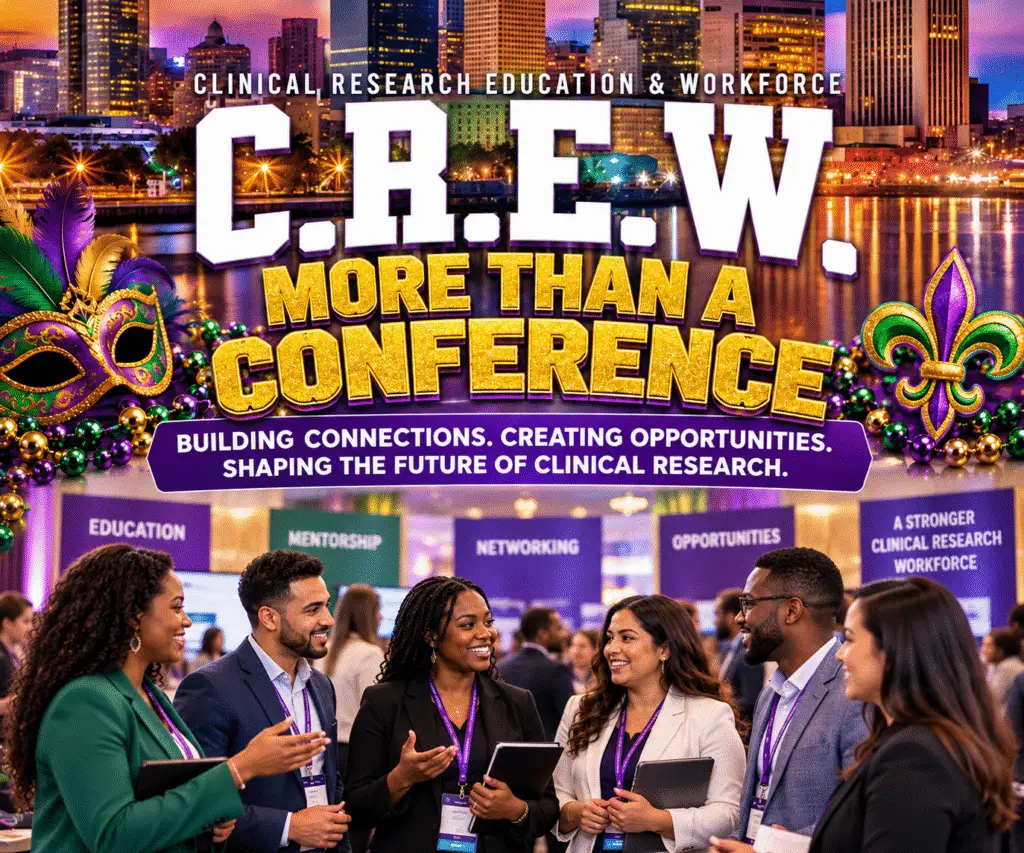


As the clinical research industry continues to grow and evolve, one thing has become increasingly clear: building the future of this industry requires more than filling positions. It requires education, mentorship, access, representation, and genuine relationships. The Clinical Research Education Workforce (C.R.E.W.) Conference 2026, taking place November 6–8 at the Hyatt Regency New Orleans, brings those pieces together in one space.
This year’s theme, “One C.R.E.W. • Big Easy Energy,” captures what makes this conference different. C.R.E.W. brings together students, emerging professionals, experienced clinical research professionals, educators, employers, and industry leaders who may be at different stages of their careers but share a common goal: strengthening the clinical research workforce.
For those trying to enter the industry, conferences like C.R.E.W. can be especially valuable. Breaking into clinical research can sometimes feel overwhelming. Job descriptions often ask for experience before someone has been given the opportunity to gain it, and understanding the many career paths available within the industry can be challenging. Having access to professionals who are willing to share their experiences, provide mentorship, and offer practical career guidance can make that journey feel much more attainable.
One of the biggest challenges facing emerging professionals is understanding how their existing skills can translate into clinical research careers. Many individuals come from healthcare administration, patient services, nursing, education, and other professional backgrounds without realizing how valuable their experiences can be. Clinical research requires professionals with diverse skill sets, including communication, organization, problem-solving, regulatory knowledge, and patient advocacy. Conferences like C.R.E.W. help bridge that gap by exposing attendees to career pathways they may not have previously considered. More importantly, they provide an opportunity to have honest conversations about navigating career transitions, overcoming barriers, and identifying the skills needed to become competitive candidates in an evolving workforce.
As a Clinical Trials Research student transitioning from healthcare administration into clinical research, I have learned firsthand how important community and networking can be. Some of my most meaningful opportunities have come from being willing to introduce myself, ask questions, stay engaged, and build genuine relationships. Networking is not simply collecting LinkedIn connections. It is about being intentional, remaining consistent, and creating relationships that can eventually lead to mentorship, referrals, encouragement, and opportunities.
C.R.E.W. 2026 creates an environment for those connections while also focusing on the knowledge and skills needed to move the industry forward. Conference conversations will explore topics across career development, mentorship, clinical research education, artificial intelligence, branding, site ownership, CRC and CRA development, and other areas shaping today’s workforce. Attendees will have opportunities to learn from industry professionals while connecting with organizations, employers, sponsors, and peers from across clinical research.
I have also had the opportunity to see another side of C.R.E.W. through my internship work supporting conference marketing and engagement. Working behind the scenes has shown me just how much intentional planning goes into creating a space where people can learn, connect, and feel like they belong. Every speaker, sponsor, attendee communication, partnership, and networking opportunity contributes to the larger purpose of the conference.
Representation is an important part of that purpose as well. As clinical research works toward becoming more representative of the populations it serves, diversity must exist not only among trial participants but throughout the workforce and within leadership. Creating spaces where professionals from different backgrounds can be visible, develop their skills, build relationships, and access opportunities helps strengthen the industry as a whole.
Equally important is what happens after the conference ends. The relationships established during these events have the potential to extend far beyond a single weekend. A conversation with an experienced professional could lead to ongoing mentorship, while connecting with someone at a similar career stage could create a lasting support system. For students and emerging professionals especially, having people who understand the challenges of entering the industry can make a significant difference. Professional development does not happen overnight, and building a successful career often requires continued learning, resilience, and a community willing to support one another along the way.
Ultimately, C.R.E.W. 2026 is about more than three days in New Orleans. It is about what attendees take home with them: a new connection, a mentor, career direction, practical knowledge, renewed confidence, or even an opportunity they did not have before walking into the room.
Sometimes one conversation really can change the direction of your career.
This November, professionals from across the clinical research community will come together in New Orleans with different experiences, different goals, and different career paths — but as One C.R.E.W.
And I am excited to be part of it.

Shanyce Sumner is an emerging clinical research professional and Clinical Trials Research student transitioning from healthcare administration into the clinical research industry. She currently serves as an intern and Student Ambassador for Black Women in Clinical Research (BWICR), supporting conference marketing, engagement, and initiatives that promote professional development. Passionate about mentorship, diversity, and workforce advancement, Shanyce is committed to building meaningful connections, expanding opportunities for aspiring research professionals, and contributing to a more inclusive future for clinical research.
Connect with Shanyce on LinkedIn.